
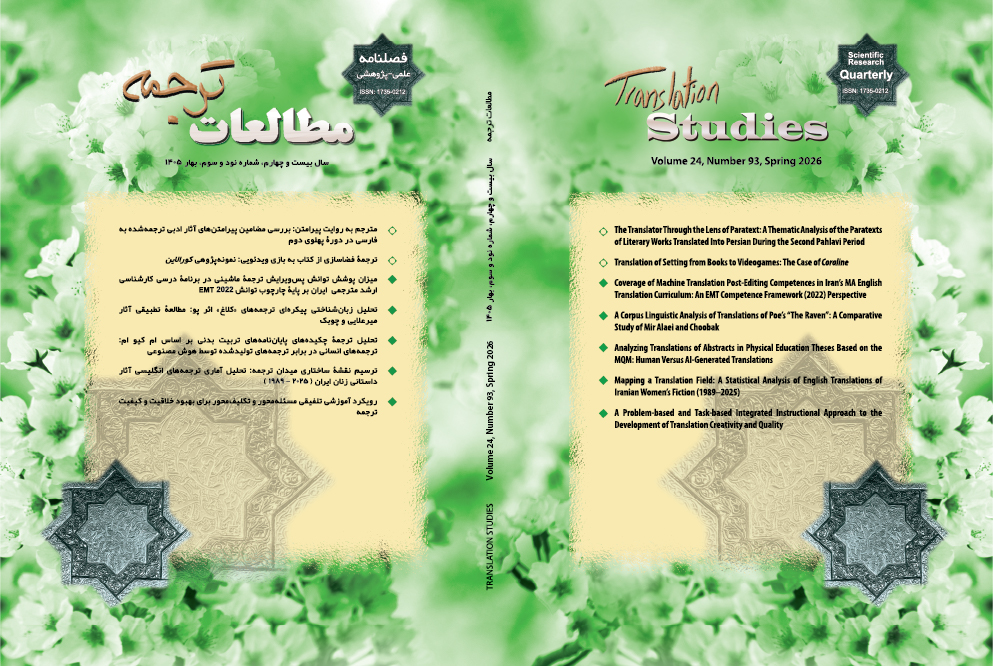
مترجم به روایت پیرامتن:
بررسی مضامین پیرامتنهای آثار ادبی ترجمهشده به فارسی در دورۀ پهلوی دوم
چکیده
پیرامتن لایهای واسط بین متن و خواننده است که گاه با دخالت مترجم به وجود میآید و میتوان ردپای موضوعات فرهنگی، اجتماعی و سیاسی را در آن جُست. پیرامتن ممکن است فرایند بازآفرینی، تفسیر و انتقال معنای متن را دستخوش تغییر نماید و بررسی آن چشمانداز بهتری از رویکرد و جایگاه مترجم در نظام ادبی در اختیار ما میگذارد. در پژوهش حاضر برآن شدیم مضامین موجود در پیرامتنهای آثار ترجمهشده ادبی به فارسی در دورۀ پهلوی (۱۳۵۷-۱۳۰۴ ش.) را بررسی کنیم و ردپای رویکرد، نگرش، اندیشه و نظرات مترجم را در باب ترجمه و مترجمی و نشر دنبال کنیم. بههمینمنظور، پس از بررسی تعداد ۱۹۸ عنوان کتاب ترجمهشده ادبی در بازه زمانی مذکور، پیرامتنهای ۵۹ کتاب شامل شناسنامۀ کتاب، پانویس و مقدمه مترجمان با ۴۶۷ نمونه داده (که ۳۷۳ نمونه در باب ترجمه بود) را ثبت و ضبط کردیم که همگی در دوره پهلوی دوم (۱۳۵۷-۱۳۲۰ ش.) بود. برچسبگذاری دادهها منجر به شناسایی هشت مضمون اصلی شامل «تبیین راهبرد و راهکارهای ترجمانی خود»، «ملاحظات نشر و چاپ کتاب» و «تبیین هدف و ضرورت و اهمیت ترجمه و نیازهای مخاطب»، ۲۰ مضمون فرعی اولیه و چهار مضمون فرعی ثانویه شد. نتایج بررسی نشان داد که تمرکز غالب مترجمان «تبیین راهبرد و راهکارهای ترجمانی خود» و ارائه و دفاع از روش خود در موافقت و یا مخالفت با رویکرد ترجمانی رایج بوده است. گذشته ازاین، پیرامتن بستری برای ابراز مشروعیت فرهنگی، ادبی و علمی اثر و ترجمه آن و نیز بیان اندیشههای مخالف مترجم نیز بوده است.
مراجع
بلوری، مزدک. (1396). عاملیت مترجم در پانویسها و یادداشتهای مترجمان ادبی معاصر در ایران. جستارهای زبانی. 8 (6)، 214–191. https://dor.isc.ac/dor/20.1001.1.23223081.1396.8.6.6.4
حسینزاده، مریم. (1396). بررسی روایتشناختی مقدمة مترجمان بر آثار داستانی ترجمهشده در ایران. مطالعات زبان و ترجمه. 50 (4). 167–139. https://doi.org/10.22067/lts.v50i4.67972
فرهادی، سمانه. (1396). نقش پژوهش و دراماتورژی در (باز)ترجمه: نگاهی به ویرایش و بازترجمۀ آثار ایبسن به قلم بهزاد قادری. مطالعات زبان و ترجمه، 2 (50). https://doi.org/10.22067/lts.v50i2.62835
عاطفمهر، زهرا. (1401). بررسی آگاهی مترجمان قاجاری از اصول و راهکارهای ترجمه: رویکردی فرامتنی. مطالعات ترجمه. 20 (79). 82–62. https://dor.isc.ac/dor/20.1001.1.17350212.1401.20.3.4.7
عرب یوسفآبادی، عبدالباسط و نورا، محبوبه. (1403). واکاوی صدای مترجم در پانویسهای ترجمههای عربی و فارسی کتاب «تمدن اسلامی در قرن چهارم هجری». مطالعات ترجمه. 22 (88). 24–7. https://dor.isc.ac/dor/20.1001.1.17350212.1403.22.4.1.0
Abrahamian, E. (2018). A history of modern Iran (2nd ed.). Cambridge University Press.
Abrahamian, E. (1982). Iran between two revolutions. Princeton University Press.
Baker, M. (2006). Translation and conflict. Routledge.
Batchelor, K. (2018). Translation and paratexts. Routledge.
Bolouri, M., & Rezvani, E. (2023). The politics of translation: Investigating paratexts of Persian translations of American literary works in two historical contexts. Iranian Journal of Translation Studies, 21(82), 61–78. https://dor.isc.ac/dor/20.1001.1.17350212.1402.21.2.7.5
Boroujerdi, M. (1996). Iranian intellectuals and the West: The tormented triumph of nativism. Syracuse University Press.
Braun, V. & Clarke, V. (2006). Using thematic analysis in psychology. Qualitative Research in Psychology, 3, 77–101. http://doi.org/10.1191/1478088706qp063oa
Chehabi, H. E. (1993). Staging the emperor’s new clothes: Dress codes and nation‐building under Reza Shah. Iranian Studies, 26(3-4), 209–233. http://doi.org/10.1080/00210869308701800
Cronin, S. (2003). Introduction. In S. Cronin (Ed.), The making of modern Iran: State and society under Riza Shah. (pp. 1–12). Routledge.
Freeth, P. J. (2023). Between consciously crafted and the vastness of context: Collateral paratextuality and its implications for translation studies. Translation Studies, 16(3), 419–435. https://doi.org/10.1080/14781700.2023.2194882
Genette, G. (1997). Paratexts: thresholds of interpretation (J. E. Lewin, Trans.). University of Nebraska Press.
Khalili, M., & Mollanazar, H. (2020). Contribution of translation to promotion of and resistance against the Second Pahlavi’s narrative of modernization regarding women. Iranian Journal of Translation Studies, 18(69), 26–42. https://journal.translationstudies.ir/ts/article/view/781
Khalili, M., & Parham, F. (2026). Literary translation and politics: A study of Iranian women’s citizenship rights. Interdisciplinary Studies of Literature, Arts & Humanities, 6(1), 7–32. https://doi.org/10.22077/islah.2025.8418.1546
Katouzian, H. (2004). The short-term society: A study in the problems of long-term political and economic development in Iran. Middle Eastern Studies, 40(1), pp. 1–22. https://doi.org/10.1080/00263200412331301867
Kung, S. (2013). Paratext, an alternative in boundary crossing: A complementary approach to translation analysis. In V. Pellat (Ed.), Text, extratext, metatext and paratext in translation (pp. 49–68). Cambridge Scholars Publishing.
Ostvar, M. (2023). Education and modernization of Iran in the first Pahlavi government. State Studies, 9(34), 57–97. https://doi.org/10.22054/TSSQ.2023.71214.1359
Sela-Sheffy, R. (2023). What does it take to be a professional translator? Identity as a resource. In J. Glückler, C. Winch, & A. M. Punstein (Eds.), Professions and proficiency (pp. 89–111). Springer. https://doi.org/10.1007/978-3-031-24910-5_5
Summers, C. (2013). What remains: The institutional reframing of authorship in translated paratexts. In V. Pellatt (Ed.), Text, extratext, metatext and paratext in translation (pp. 9–32). Cambridge Scholars Publishing.
Tahir-Gürçağlar, Ş. (2002). What texts don’t tell: The uses of paratexts in translation research. In T. Hermans (Ed.), Crosscultural transgressions: Research models in translation studies II, Historical and ideological issues (pp. 46–60). St. Jerome Publishing.
Tavakoli-Targhi, M. (2001). Refashioning Iran, orientalism, occidentalism and historiography. Palgrave.
Völcker, M. (2020). Paratexts on a social network site and their relevance in the production of meaning: Results of a qualitative investigation of Twitter-Feeds. Plos One, 15(9), 1–27. https://doi.org/10.1371/journal.pone.0238765
Zahirinejad, M. (2022). Education and cultural change in the modernisation of Iran: The role of Shi'ite clerics and the middle class. Rocznik Orientalistyczny, 75(2), 122–137. https://doi.org/10.24425/ro.2022.143579
Downloads
چاپشده
ارجاع به مقاله
شماره
نوع مقاله
DOR
مجوز
حق نشر 2026 Kobra Arasskhani, S. Hossein Arjani

این پروژه تحت مجوز بین المللی Creative Commons Attribution-NonCommercial 4.0 می باشد.
Copyright Licensee: Iranian Journal of Translation Studies. This article is an open access article distributed under the terms and conditions of the Creative Commons Attribution–NonCommercial 4.0 International (CC BY-NC 4.0 license).